
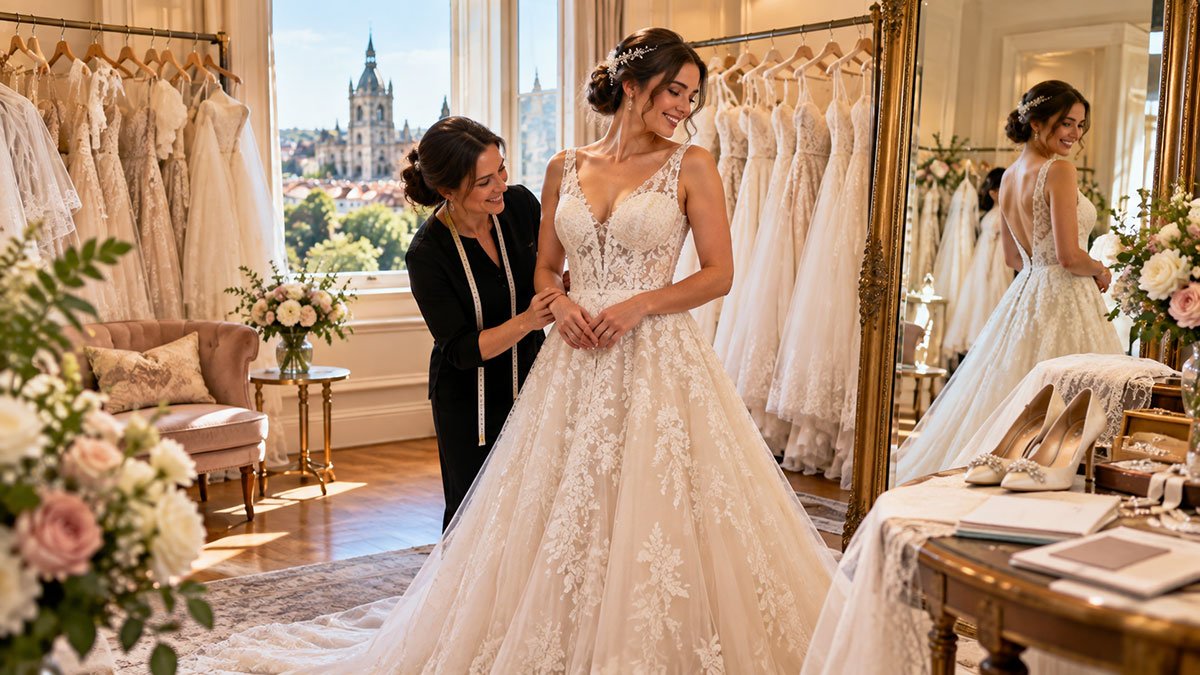
How to Choose the Perfect Wedding Dress: A Practical Guide
Choosing a wedding dress is one of the most personal decisions in wedding planning. The right gown should reflect your style, suit the setting and feel comfortable enough to wear throughout the celebration.
With thousands of styles available, however, shopping can quickly become overwhelming. A dress that looks beautiful in a photograph may feel completely different when you walk, sit or dance in it.
The best approach is to start with the practical details. Set your budget, consider your venue and wedding season, understand the main silhouettes and allow enough time for ordering and alterations. Then you can focus on finding a gown that makes you feel confident.
Here is how to make the process easier.
1. Set Your Wedding Dress Budget First
Before booking bridal appointments, decide how much you are comfortable spending.
Importantly, your wedding dress budget should cover more than the gown itself. Depending on your choices, you may also need to pay for:
- Alterations
- Veil or headpiece
- Shoes
- Undergarments
- Jewellery
- Sleeves, belts or other accessories
- Steaming or pressing
- Dress storage or preservation
Ask the boutique what is included in the quoted price. A gown that appears affordable at first can become significantly more expensive once alterations and accessories are added.
It is also sensible to keep a small buffer for unexpected costs.
2. Consider Your Wedding Venue and Overall Style
Your venue can help narrow your choices.
A formal ballroom wedding may suit a structured gown with a dramatic train. A garden celebration could work beautifully with a lighter, flowing design. A beach wedding may call for a gown that is easy to move in and comfortable in warmer conditions.
Think about the practical environment as well as the appearance.
Ask yourself:
- Will you be walking on grass, sand, stone or polished floors?
- Will you spend much of the day indoors or outdoors?
- Is the ceremony and reception in the same location?
- What weather is likely at the time of year?
- Will you need to travel between venues?
- Does the wedding have a formal or relaxed dress code?
Your dress should complement the wedding rather than make the day more difficult.
3. Understand Wedding Dress Silhouettes
You do not need to become an expert in bridal fashion before your first appointment. Knowing the basic silhouettes, however, makes shopping much easier.
A-Line
An A-line gown has a fitted upper section and a skirt that gradually widens toward the floor. It is versatile and works with many wedding styles.
Ball Gown
A ball gown has a fitted bodice and a fuller skirt. It creates a traditional, dramatic appearance and can make a strong statement at a formal wedding.
Fit-and-Flare
This style follows the body before gradually widening toward the lower part of the skirt. It can create a defined silhouette while still allowing movement.
Mermaid
A mermaid gown is closely fitted through much of the body before flaring lower down. It creates a more dramatic shape and is particularly suited to brides who want a structured, glamorous look.
Sheath
A sheath gown follows a relatively straight line from the neckline toward the hem. It can create an elegant, streamlined appearance and may work well for minimalist or modern weddings.
Short or Tea-Length
A shorter gown can be practical for informal weddings, civil ceremonies, destination celebrations or brides who want greater freedom of movement.
Do not treat these descriptions as rules. The most flattering dress is not determined by a single body-shape formula. Proportion, construction, fabric and fit can all change how a gown looks.
4. Choose a Dress That Feels Like You
It is easy to become influenced by trends, social media and other people’s opinions.
Instead, think about the clothes and styles that make you feel confident in everyday life. If you normally prefer simple, structured clothing, an extremely elaborate gown may not feel natural simply because it is fashionable.
Likewise, if you love dramatic fashion, there is no reason to choose a minimalist gown because someone else thinks it is more traditional.
Your wedding dress should feel like an elevated version of your personal style.
5. Pay Attention to Fabric
The same silhouette can look completely different depending on the fabric.
Common bridal fabrics include:
- Lace
- Tulle
- Chiffon
- Crepe
- Satin
- Organza
- Mikado
- Taffeta
Fabric affects appearance, movement, structure and comfort. Some materials create a soft, flowing effect, while others provide more structure.
The season also matters. A lightweight fabric may feel more comfortable in warm weather, while a heavier structured gown can work well for a cooler celebration.
Do not choose fabric based solely on photographs. Move around in the dress and pay attention to how it feels.
6. Think About Comfort as Well as Appearance
You could spend many hours in your wedding dress.
During the fitting, do more than stand in front of a mirror.
Try to:
- Walk normally
- Sit down
- Raise your arms
- Turn around
- Bend slightly
- Walk up a few steps if possible
- Move as though you are dancing
Check whether the neckline stays in place and whether you can breathe comfortably.
A beautiful dress that restricts your movement can become frustrating after several hours. Comfort does not mean compromising on style. It means finding a gown that works for the way you intend to spend your wedding day.
7. Start Shopping With Enough Time
The right timeline depends on the gown, designer, boutique and whether you are buying made-to-order or ready-to-wear.
As a general planning approach, many bridal specialists recommend beginning the search roughly 9 to 12 months before the wedding, particularly when you want a made-to-order gown. Current Irish bridal guidance also recommends allowing time between ordering, delivery and alterations.
If your wedding is only a few months away, do not panic.
Ask boutiques about:
- Ready-to-wear gowns
- Sample dresses
- Dresses already in stock
- Rush-order possibilities
- Dresses available for immediate purchase
The important point is to work backwards from your wedding date and leave enough time for alterations.
8. Research Before Booking Bridal Appointments
Spend some time researching before visiting boutiques.
Create a small collection of dresses you like. Look for common details rather than trying to copy one particular gown.
For example, you may discover that you repeatedly save:
- Square necklines
- Simple satin fabrics
- Long sleeves
- A-line skirts
- Minimal embellishment
- Open backs
This gives your stylist useful information without locking you into one design.
Also check which designers and price ranges each boutique carries. Current Irish bridal-shopping guidance recommends researching boutiques beforehand and keeping the first round of appointments manageable.
9. Do Not Bring Too Many Opinions
Wedding dress shopping can become confusing when everyone has a different opinion.
A large group may have different ideas about what you should wear, which can make it harder to understand your own reaction to a dress.
Consider bringing one or two people whose opinions you genuinely trust.
Most importantly, listen to yourself.
A useful question is not simply, “Do you like the dress?”
Ask:
“Do I feel comfortable, confident and like myself in this dress?”
10. Know What to Bring to Your Appointment
Wear or bring items that will help you understand how the complete look could work.
Depending on the boutique, useful items can include:
- Comfortable, neutral-coloured underwear
- A strapless bra if appropriate
- Shoes with a similar heel height to your wedding shoes
- Inspiration photographs
- Information about your venue
- Your wedding date
- A realistic budget
Avoid turning the appointment into a production. You are there to assess the dress, not create the perfect photograph for social media.
11. Check the Fit, Not Just the Sample Size
Bridal boutiques often use sample dresses for appointments. The sample may not fit you perfectly.
That is normal.
A gown can be clipped, pinned or otherwise adjusted temporarily so you can get a better idea of its shape.
Do not reject a style simply because the sample does not fit perfectly.
At the same time, do not assume every fitting problem can be solved through alterations. Ask the stylist what can realistically be changed before placing your order.
12. Treat Alterations as Part of the Dress
Buying the gown is only one stage of the process.
Most bridal gowns require some degree of alteration to achieve the desired fit. Common adjustments include:
- Hemming
- Taking in the bodice
- Adjusting straps
- Altering the neckline
- Adding bustle arrangements
- Adjusting sleeves
- Refining the waist or bust fit
Current Irish bridal alteration guidance commonly recommends starting the process several weeks before the wedding and allowing multiple fittings when necessary.
The exact schedule depends on the gown and the alterations required, so ask your boutique or seamstress for a specific plan.
Bring your wedding shoes and the undergarments you expect to wear when appropriate. These can affect the final fit and hem length.
13. Ask About the Total Cost Before You Order
Before paying a deposit, ask for a clear breakdown of the expected costs.
Questions worth asking include:
- What is the price of the gown?
- Are alterations included?
- Are accessories included?
- Is there a consultation fee?
- How much is the deposit?
- When is the balance due?
- What is the expected delivery date?
- What happens if delivery is delayed?
- What is the cancellation policy?
- Can the gown be returned?
- What happens if the dress requires unexpected alterations?
Get important terms in writing.
If you are buying in Ireland, the Competition and Consumer Protection Commission advises consumers to understand deposit conditions, payment arrangements and delivery terms before committing to a purchase.
14. Be Careful With Online and Made-to-Order Dresses
Buying a wedding dress online can provide more choice, but it also requires additional care.
Check:
- Where the seller is based
- The exact sizing system
- Measurement instructions
- Delivery times
- Return conditions
- Whether the dress is made to order
- Additional shipping or import costs
- Customer reviews from reliable sources
Do not assume that an online purchase has the same return conditions as an off-the-rack purchase from a local shop.
In Ireland, for example, consumer protections for online purchases can include a cooling-off period, but exceptions apply to personalised or made-to-order products. Faulty or incorrectly supplied goods are treated differently.
Always check the applicable rules and the seller’s terms before ordering.
15. Consider Sample, Pre-Owned and Ready-to-Wear Dresses
A brand-new made-to-order gown is not the only option.
Depending on your priorities, you could consider:
Sample Dresses
Boutiques sometimes sell dresses used as display or fitting samples. These can offer savings, but check the condition carefully and determine whether alterations are practical.
Pre-Owned Dresses
A pre-owned gown can reduce the cost of the dress itself and give an existing gown another occasion to be worn.
Inspect photographs carefully and ask about cleaning, alterations, damage and the original purchase details.
Ready-to-Wear Dresses
If your wedding date is approaching quickly, an in-stock gown can simplify the process. You still need to allow time for alterations.
Custom or Bespoke Dresses
A bespoke gown can offer extensive control over the design, fabric and fit. It can also require a longer planning period and a clear understanding of costs.
There is no single correct way to buy a wedding dress.
16. Keep the Whole Wedding Look in Mind
The gown is important, but it is only one part of your overall appearance.
Think about how it will work with:
- Wedding shoes
- Veil or headpiece
- Jewellery
- Hairstyle
- Makeup
- Bouquet
- Bridesmaid dresses
- Groom’s outfit
- Wedding venue
You do not need to purchase everything at once. However, keeping the overall look in mind can prevent accessories from competing with the dress.
17. Give Yourself Permission to Change Your Mind
Your first idea may not be your final choice.
You may arrive believing that you want a particular neckline and discover that another style feels much better. You may also find that a dress looks very different on your body than it did in a photograph.
Try a few different silhouettes.
An experienced bridal stylist can also suggest options based on what you like, your venue and the type of look you want.
The goal is not to find the dress that looks best on a screen. It is to find the dress that makes sense for you and your wedding day.
A Simple Wedding Dress Shopping Checklist
Before you place your order, make sure you can answer these questions:
- Does the dress fit my wedding style and venue?
- Am I comfortable wearing it for several hours?
- Can I walk and sit comfortably?
- Does the price fit my complete dress budget?
- Have I included alterations and accessories?
- Do I understand the deposit and payment terms?
- Is the expected delivery date realistic?
- Do I know where and when alterations will take place?
- Have I checked the cancellation and return conditions?
- Do I genuinely feel confident wearing it?
If the answers are yes, you are in a much stronger position to make your decision.
Finding the Perfect Wedding Dress
The perfect wedding dress does not have to follow a particular colour, silhouette, trend or tradition.
It should fit the person wearing it, work with the wedding you are planning and allow you to enjoy the day without constantly adjusting or worrying about your clothing.
Start with a realistic budget and timeline. Consider the venue and season. Try different silhouettes. Pay attention to fabric and comfort. Ask detailed questions before paying a deposit, and leave enough time for professional alterations.
Most importantly, choose a dress because you feel good wearing it. The best gown is the one that allows you to feel confident, comfortable and completely present on your wedding day.
