

Erlangjian Scenic Area on the southern shore of Qinghai Lake, where a distinctive peninsula extends into the vast blue waters of the Qinghai-Tibet Plateau.
Erlangjian Scenic Area: Qinghai Lake Travel Guide
On the southern shore of Qinghai Lake in northwestern China, Erlangjian Scenic Area offers sweeping views of deep-blue water, distant mountains and the wide-open landscapes of the Qinghai-Tibet Plateau. Its distinctive peninsula, lakeside walking areas and Tibetan cultural features make it one of the most accessible places to experience China’s largest inland saltwater lake.
Located about 150 kilometres from Xining, the capital of Qinghai Province, Erlangjian Scenic Area is a popular destination for travellers exploring the region. Visitors can admire the lake from designated viewing areas, take a sightseeing boat when conditions permit and discover the natural environment surrounding the peninsula.
The area also has an unusual history. Before becoming a major tourist attraction, part of the lakeshore served as a military torpedo-testing facility.
Today, the destination combines lakeside sightseeing, regional cultural heritage and opportunities to appreciate the ecology of the plateau.
This guide covers the main attractions, activities, transportation, seasonal conditions and practical information you need to plan a visit.
Where Is Erlangjian Scenic Area?
Erlangjian Scenic Area, known in Chinese as 青海湖二郎剑景区, lies on the southern shore of Qinghai Lake in Gonghe County, Hainan Tibetan Autonomous Prefecture, Qinghai Province.
The attraction sits along National Highway G109, making it accessible by road from Xining.
Qinghai Lake itself lies more than 3,190 metres above sea level on the northeastern Qinghai-Tibet Plateau. Its vast waters extend across a dramatic landscape of grasslands, rolling hills and distant mountain ranges.
The lake forms part of an ecologically important region that supports migratory birds, native fish and other wildlife.
Erlangjian is one of the main officially managed scenic areas around the lake, with designated visitor facilities and organised sightseeing activities.
For travellers who want to experience Qinghai Lake without attempting a complete circuit of its shoreline, it provides a convenient starting point.
What Makes Erlangjian Scenic Area Special?
Erlangjian’s most recognisable geographical feature is its long, narrow peninsula extending into Qinghai Lake.
The peninsula resembles a sword pointing towards the water, giving the scenic area its distinctive identity.
Its position offers a different perspective on the lake from that of the main shoreline.
Visitors can appreciate the immense scale of Qinghai Lake while observing the relationship between water, wetlands, surrounding mountains and the open plateau.
Several characteristics make the area particularly interesting:
- Panoramic views across Qinghai Lake.
- A distinctive peninsula extending into the lake.
- Lakeside promenades and designated viewing platforms.
- Sightseeing boat services during suitable operating conditions.
- Tibetan cultural and religious features.
- Opportunities to observe waterbirds.
- Historical connections with a former torpedo-testing facility.
The landscape changes noticeably throughout the year. Summer brings greener surroundings, while colder months can transform sections of the lake into striking ice formations.
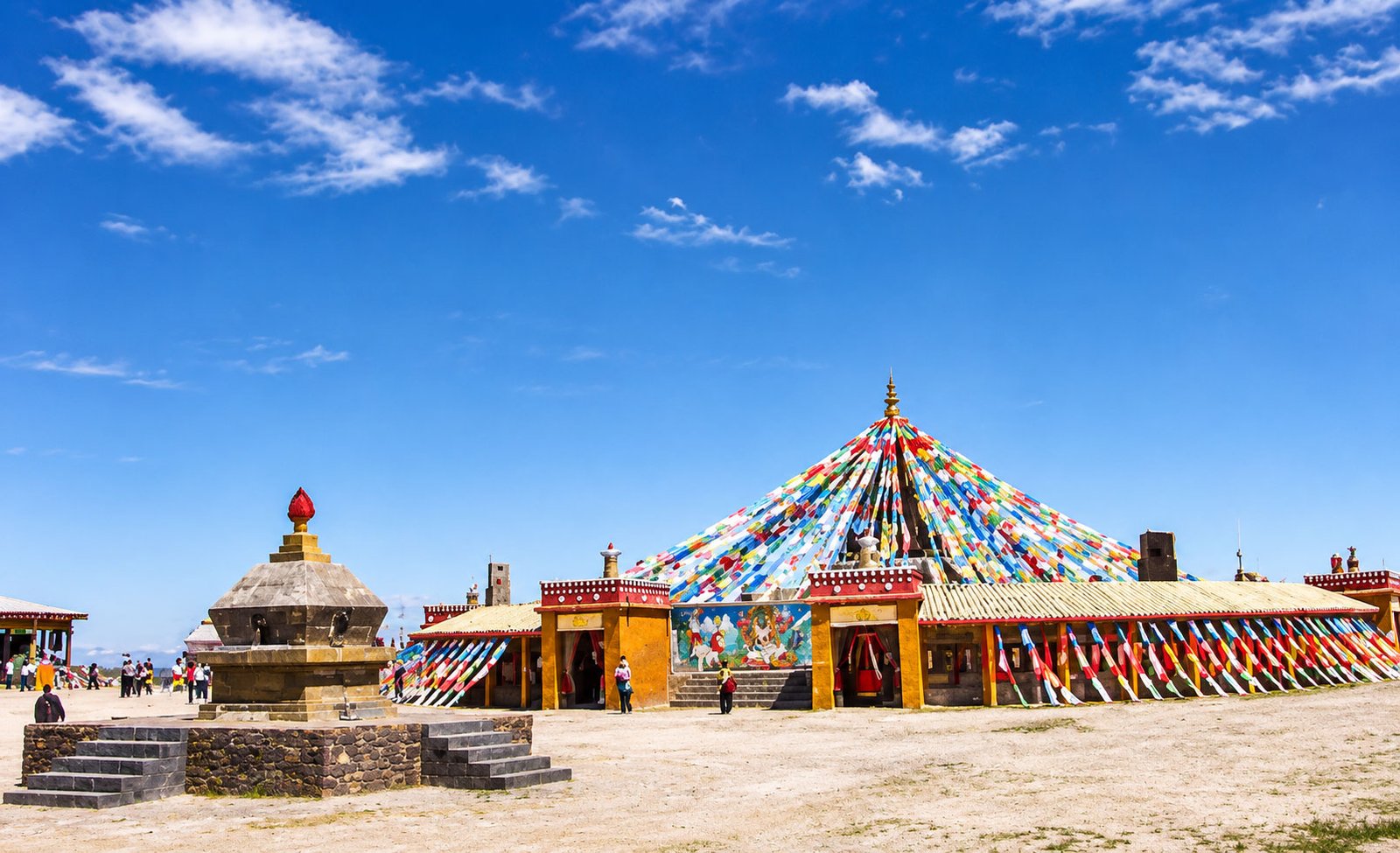
A Tibetan-style cultural landmark at Erlangjian Scenic Zone near Qinghai Lake, China, featuring colourful Buddhist prayer flags, traditional architecture and religious symbols.
Best Things to See and Do at Erlangjian Scenic Area
1. Explore Erlangjian Peninsula
The peninsula is the defining landmark of Erlangjian Scenic Area.
Its elongated shape extends into Qinghai Lake and provides opportunities to view the water from different angles.
The peninsula is especially interesting because it offers a sense of the lake’s extraordinary size. On clear days, the water stretches towards distant mountain ranges and an expansive horizon.
Depending on current visitor arrangements, sightseeing vehicles may take travellers from the main visitor area towards the peninsula.
The scenic area has previously operated an internal route linking the entrance area, performance facilities, viewing platforms, dock and peninsula.
However, routes and access arrangements can change, so confirm the current service before planning your visit.
The peninsula is particularly rewarding for landscape photographers. Its shoreline provides opportunities to frame the lake against wide skies, distant hills and Tibetan cultural features.
2. Enjoy Panoramic Views of Qinghai Lake
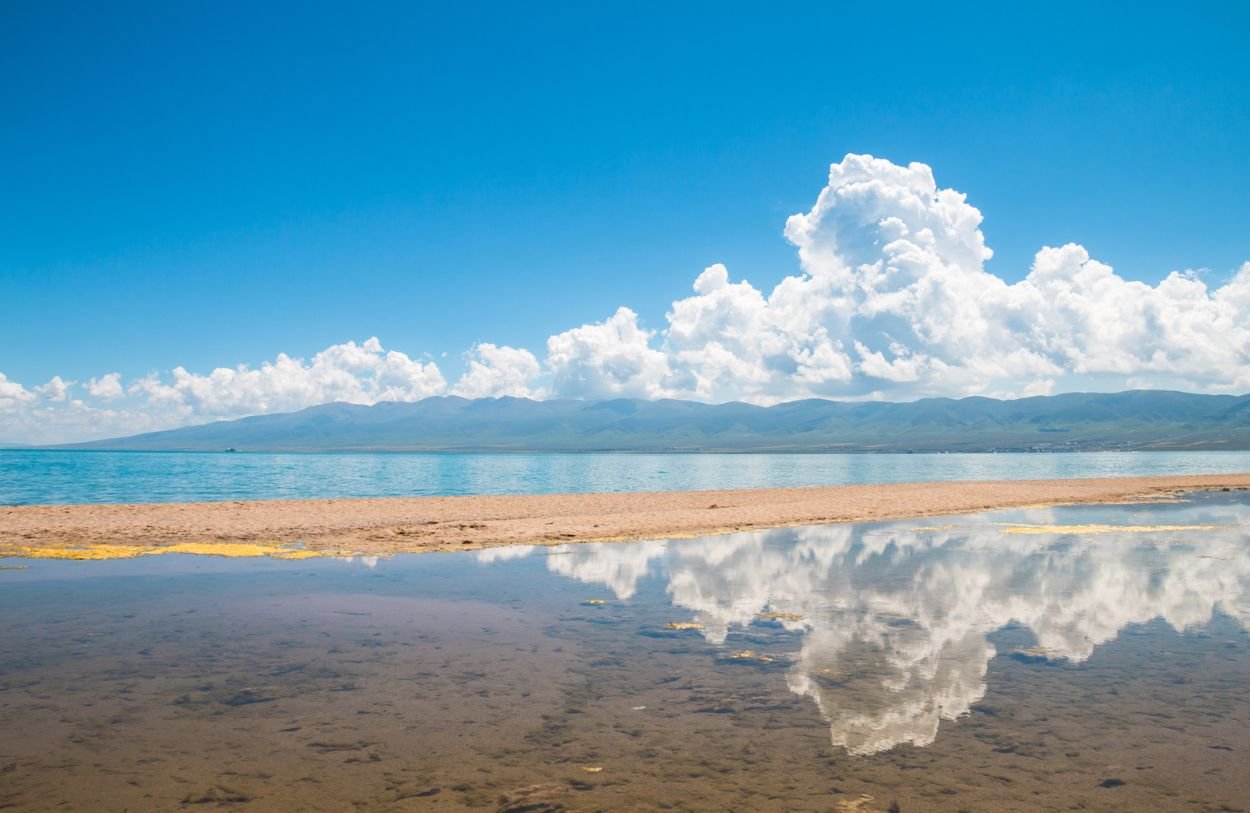
Beautiful scenery at Qinghai Lake in Qinghai Province, China, featuring clear blue waters, distant mountains and dramatic white clouds reflected along the peaceful shoreline.
The outstanding attraction at Erlangjian is the natural scenery.
Qinghai Lake’s waters often appear a rich blue, contrasting with the surrounding grasslands and mountains.
The colour and appearance of the lake change with the light, cloud cover and weather conditions.
On clear days, the lake can appear almost endless. When clouds move across the plateau, shifting shadows give the water and surrounding hills a different character.
Visitors can enjoy the scenery from designated lakeside paths and observation areas.
The main waterfront zone is suitable for those who prefer a gentle walk rather than a strenuous outdoor excursion.
However, the high altitude means even ordinary walking may feel more tiring than it would at sea level.
Take your time, especially if you have recently arrived from a much lower elevation.
3. Take a Sightseeing Boat on Qinghai Lake
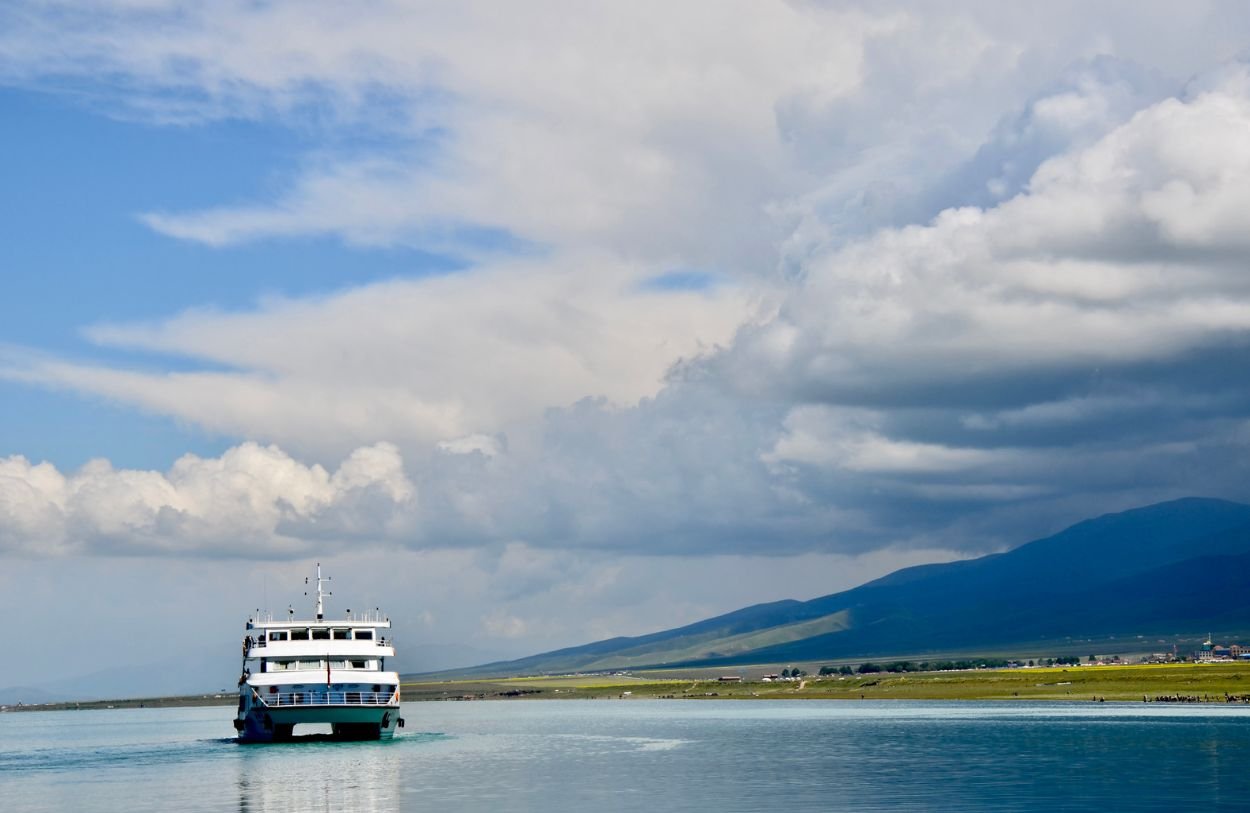
A sightseeing boat cruises across Qinghai Lake in Qinghai Province, China, offering visitors scenic views of the surrounding mountains and vast plateau landscape.
A sightseeing boat trip is one of the activities associated with Erlangjian Scenic Area.
The boat services provide a different perspective on the lake’s shoreline and surrounding plateau landscape.
From the water, passengers can appreciate the open horizon and the geographical position of Erlangjian Peninsula.
The experience can be particularly appealing when the weather is clear and the lake is calm.
However, boat trips depend on operating arrangements and lake conditions.
Strong winds, rainfall and rough water may cause delays, schedule changes or cancellations.
Visitors should check current service availability, ticket arrangements and safety requirements at the official visitor centre.
Always use authorised operators and follow crew instructions throughout the journey.
4. Discover Tibetan Cultural Features
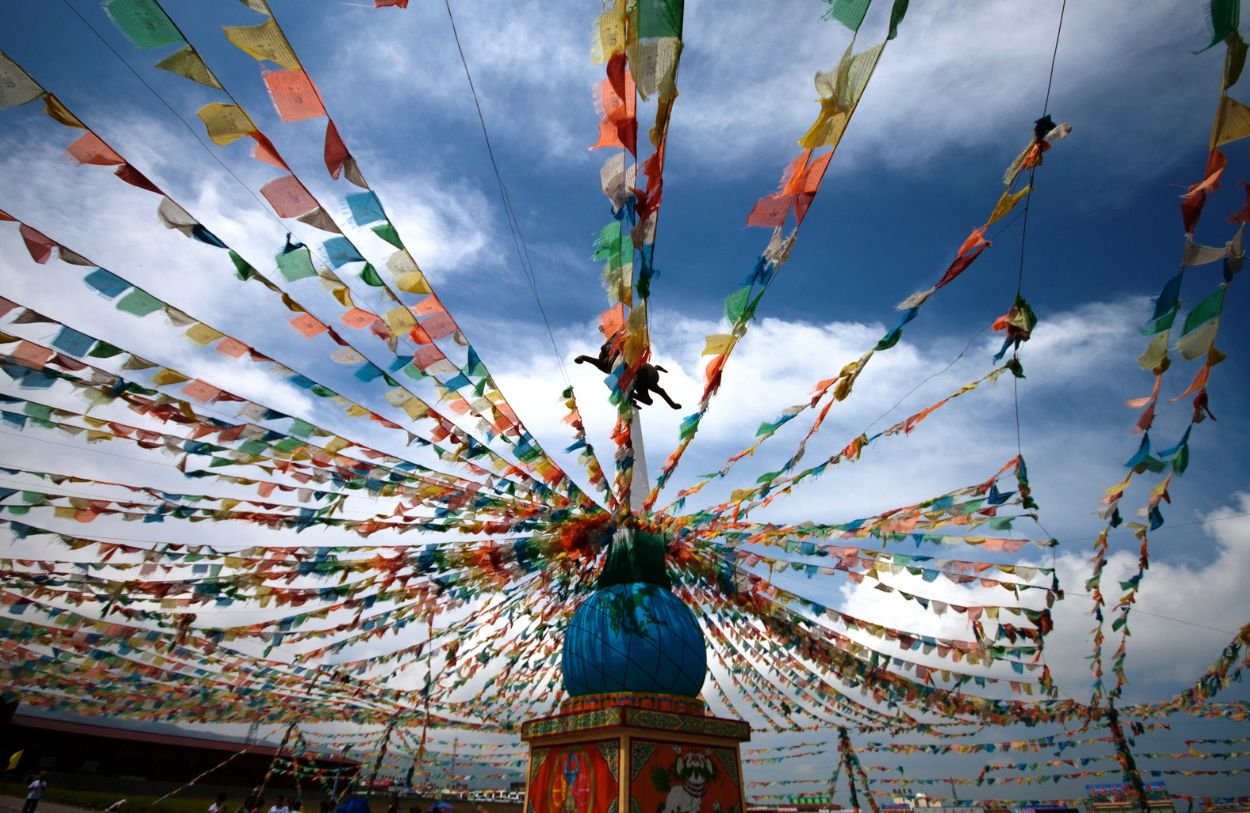
Colourful Tibetan Buddhist prayer flags radiate above a decorated religious structure, reflecting the spiritual traditions of the Qinghai-Tibet Plateau in China.
The wider Qinghai Lake region has strong connections with Tibetan culture, religion and traditional pastoral life.
At Erlangjian, Tibetan-style decorative features, prayer flags and Buddhist symbols contribute to the cultural atmosphere of the scenic area.
Colourful prayer flags are particularly striking against the blue water and expansive sky.
In Tibetan Buddhist tradition, such flags carry prayers and spiritual messages, while religious monuments reflect the importance of faith in local cultural life.
Visitors may also encounter ornamental structures and displays associated with Tibetan traditions.
These features provide an opportunity to appreciate the region’s cultural heritage alongside its natural scenery.
However, visitors should not assume that every historical display, cultural village or exhibition described in older travel materials continues to operate.
Check the current attraction map and visitor information before looking for a particular site.
When photographing religious features, respect signs and local customs. Ask permission before taking close-up photographs of people participating in religious activities.
5. Observe Birds and Lakeside Wildlife
Qinghai Lake plays an important role in bird migration across the northeastern Qinghai-Tibet Plateau.
Its wetlands, shorelines and surrounding grasslands provide habitats for several species of waterbirds.
Visitors to Erlangjian may observe birds resting on the water, flying near the shoreline or feeding in suitable wetland areas.
The peninsula and designated waterfront viewpoints offer opportunities for birdwatching without disturbing sensitive habitats.
However, sightings depend on the season, weather and natural movements of the birds.
To enjoy birdwatching responsibly:
- Remain on designated paths and viewing platforms.
- Carry binoculars if you want a closer view.
- Avoid approaching nesting or resting birds.
- Never feed wild birds or other animals.
- Keep noise to a minimum near wildlife habitats.
The protected status of Qinghai Lake means some environmentally sensitive areas restrict public access.
Visitors should never enter closed sections of the nature reserve simply to obtain a better photograph.
6. Explore the Lakeside Dock and Walking Areas
Erlangjian’s dock area is an important part of the visitor experience.
It provides access to sightseeing boat services and offers attractive views towards the lake and surrounding scenery.
Visitors can spend time walking along the authorised waterfront routes, observing the water and photographing the landscape.
The changing light makes the area particularly appealing to photographers.
On calm days, reflections can create beautiful compositions, while breezy conditions reveal the movement of the water.
The dock is also a convenient place to appreciate the scale of Qinghai Lake without travelling towards the peninsula.
For visitors with limited time, exploring the main waterfront and viewing areas can provide a worthwhile experience even without a boat excursion.
7. Discover the History of the Former Torpedo-Testing Base
One of Erlangjian’s more unusual historical associations is its connection with China’s former torpedo-testing activities.
During the development of China’s naval technology, Qinghai Lake provided an inland environment for testing torpedo equipment.
The site became associated with the area’s military-industrial history before the surrounding lakeshore developed into a tourism destination.
This legacy distinguishes Erlangjian from many other natural attractions around Qinghai Lake.
The former testing facilities form part of the area’s historical story, although visitors should not assume that every surviving structure is open to the public.
Check with scenic-area staff if you are interested in learning more about the former military site or visiting any officially accessible historical displays.
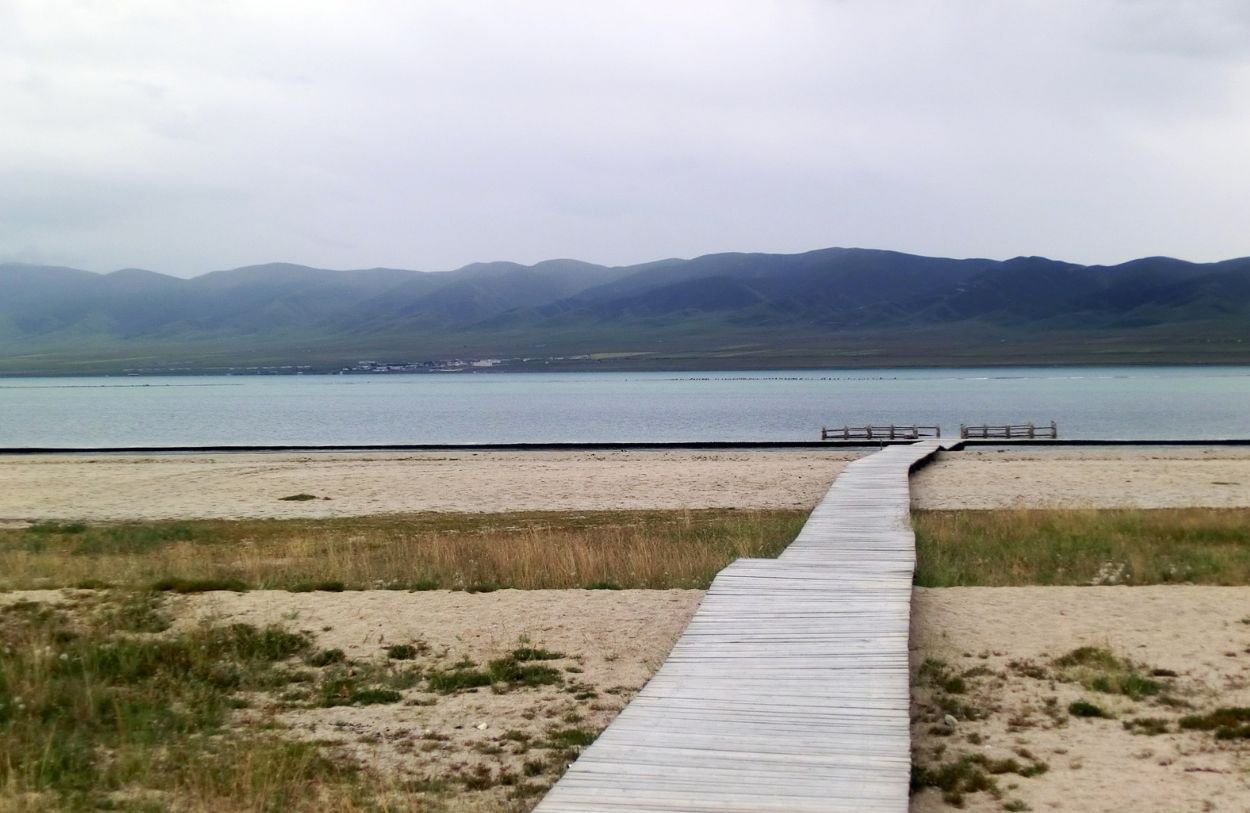
A peaceful wooden boardwalk stretches towards the shores of Qinghai Lake, offering scenic views of the lake, surrounding grasslands and distant mountains in Qinghai Province, China.
The Natural Beauty of Qinghai Lake
Qinghai Lake is China’s largest inland saltwater lake and one of the most distinctive landscapes in the country’s northwest.
Its location on the Qinghai-Tibet Plateau creates a setting unlike the lower-altitude lakes found elsewhere in China.
The surrounding environment includes grasslands, wetlands, mountain slopes and habitats that support important wildlife populations.
The lake also plays a significant role in the region’s ecological balance.
Its water levels have changed over time, influencing wetlands, shoreline habitats and the surrounding environment.
For travellers, the scenery is a major attraction. Wide blue skies, open grasslands and distant mountains create a sense of space that is difficult to appreciate from photographs alone.
Erlangjian provides an accessible introduction to this landscape while directing visitors towards officially managed tourism facilities.
Best Time to Visit Erlangjian Scenic Area
The best time depends on whether you prefer summer landscapes, fewer visitors or winter scenery.
June to September: Summer Lake Views
Summer is generally the most popular period for visiting Qinghai Lake.
The surrounding grasslands become greener, and the lake’s blue water contrasts beautifully with the vegetation.
Yellow rapeseed flowers can appear in agricultural areas around Qinghai Lake during the summer flowering season, particularly in July.
However, flowering periods depend on weather and local agricultural conditions.
July and August can attract large numbers of visitors, especially during domestic holiday periods.
Consider booking transport and accommodation in advance if travelling during the busiest months.
April to May: Spring Scenery
Spring brings gradually changing conditions as the plateau emerges from winter.
The lake and surrounding hills can look particularly atmospheric during this period.
However, temperatures may remain low, and strong winds are possible.
Travellers should prepare for variable weather and check whether their preferred boat services or sightseeing activities are operating.
October to November: Cooler Weather
Autumn offers a different landscape, with cooler temperatures and changing colours across the plateau.
The reduced warmth may make extended outdoor sightseeing less comfortable, particularly when wind increases the chill.
Those who prefer quieter surroundings may appreciate travelling outside the busiest summer period.
However, shorter daylight hours and seasonal operating arrangements require careful planning.
Winter: Ice and Snow Landscapes
During the colder months, parts of Qinghai Lake freeze, creating striking winter scenery.
The scenic area has previously organised designated winter viewing experiences, including trips to observe blue ice.
However, these activities depend on seasonal arrangements, weather and ice conditions.
Never walk onto frozen lake surfaces independently.
Ice thickness can vary considerably, and cracks or unstable sections can create serious hazards.
Visitors should use only officially authorised viewing routes.
How to Reach Erlangjian Scenic Area from Xining
Xining is the principal gateway for visiting Qinghai Lake.
The city has an airport, major railway connections and road transport services linking it with other parts of China.
Erlangjian lies approximately 150 kilometres from Xining along the southern side of Qinghai Lake.
By Private Car or Taxi
Travelling by private car or hiring a driver provides flexibility.
The route follows roads connecting Xining with the Qinghai Lake region, including National Highway G109 near Erlangjian.
A private vehicle allows travellers to organise their sightseeing around weather conditions and individual preferences.
However, roadworks, traffic and seasonal weather may affect journey times.
If hiring a driver, agree on the itinerary, waiting arrangements and total cost before departure.
By Organised Tour
An organised day tour from Xining can be convenient for visitors unfamiliar with the area.
Many Qinghai Lake itineraries include Erlangjian as a principal stop.
Before booking, confirm exactly what the package includes.
Ask whether the price covers the scenic-area entrance ticket, internal transport, boat excursions and meals.
Tour descriptions can vary, and optional activities may require additional payment.
By Public Transport
Public transport connections from Xining towards Qinghai Lake may provide another option.
However, services, departure points and onward connections can change.
Travellers who prefer buses should verify the current route and return arrangements through a recognised transport operator or their accommodation in Xining.
Do not rely on old bus timetables or assume that a service will stop directly outside the scenic-area entrance.
For a same-day visit, confirming the return journey is particularly important.
Erlangjian Scenic Area Tickets and Opening Arrangements
Erlangjian operates as a managed scenic attraction with visitor admission arrangements.
Additional activities, including sightseeing vehicles and boat excursions, may involve separate charges.
Entry prices, concessions, operating hours and booking requirements can vary by season.
The scenic area’s management has also adjusted operating arrangements during busy periods.
For this reason, visitors should check the latest official information rather than relying on fixed schedules published in older travel guides.
Before travelling, confirm:
- The current entrance ticket price.
- Whether advance reservation is required.
- Opening and last-entry times.
- Sightseeing vehicle availability.
- Boat services and additional charges.
- Accepted payment methods and identification requirements.
- Any temporary restrictions caused by weather or maintenance.
The officially published Erlangjian visitor enquiry number is +86 974 851 9826.
If you are travelling internationally, verify entry and visa requirements for China according to your nationality before departure.
High-Altitude Travel: What Visitors Should Know
Qinghai Lake sits at approximately 3,200 metres above sea level.
At this elevation, the reduced oxygen pressure can affect travellers who arrive without sufficient time to acclimatise.
Some visitors may experience headaches, dizziness, fatigue or nausea associated with altitude illness.
Even a gentle lakeside walk may require more effort than expected.
Practical Altitude Precautions
- Avoid rushing into strenuous physical activities after arriving at high altitude.
- Consider gradual acclimatisation when planning a longer plateau itinerary.
- Drink water regularly and avoid excessive alcohol.
- Wear sun protection because ultraviolet exposure is stronger at altitude.
- Carry warm clothing, even during summer.
- Seek medical advice before travelling if you have relevant heart, lung or other health conditions.
If symptoms of altitude illness develop, avoid ascending to higher elevations.
Worsening symptoms, confusion, severe breathlessness or difficulty walking require urgent medical attention and descent to a lower altitude.
Visitors who are uncertain about their fitness for high-altitude travel should consult a healthcare professional before departure.
Responsible Tourism at Qinghai Lake
Qinghai Lake is a nationally protected natural environment.
The authorities have introduced restrictions to protect its wildlife, wetlands and fragile plateau ecosystems.
Visitors should respect these rules even when unofficial guides or operators suggest alternative routes.
Important precautions include:
- Enter only through officially authorised scenic areas and access points.
- Never climb over barriers to enter restricted nature-reserve areas.
- Avoid disturbing nesting birds or other wildlife.
- Do not catch, purchase or consume protected wild fish from the lake.
- Take rubbish away or use designated waste facilities.
- Park only in permitted areas.
- Avoid unauthorised camping, roadside barbecues or driving across grassland.
- Choose licensed operators for organised tourism activities.
These measures help protect the environment and reduce risks for visitors.
Suggested Erlangjian Scenic Area Itinerary
Travellers visiting from Xining can plan a day around the lake, although the time available at Erlangjian will depend on road conditions and transport arrangements.
Morning: Travel from Xining
Begin the journey early enough to allow a relaxed visit.
Enjoy the changing plateau scenery along the route, but stop only at authorised roadside facilities or viewpoints.
On arrival, check the current attraction map and boat-service information.
Late Morning: Explore the Waterfront
Start at the main lakeside viewing area.
Take photographs of Qinghai Lake, enjoy the open landscape and explore the permitted walking paths.
This is also an opportunity to observe birds from a respectful distance.
Midday: Visit the Peninsula
If the internal sightseeing service is operating, consider travelling towards Erlangjian Peninsula.
Explore accessible viewpoints and appreciate the different perspectives across the water.
Take breaks as needed, especially if you are still adjusting to the altitude.
Afternoon: Consider a Boat Excursion
If weather and operating conditions permit, a boat trip offers another way to experience Qinghai Lake.
Alternatively, spend more time exploring the shoreline and enjoying the lake views.
Finish your visit with enough time to return comfortably to Xining or continue to your next destination.
Combining Erlangjian with Other Qinghai Attractions
Erlangjian can form part of a longer Qinghai itinerary.
Travellers exploring the province often combine Qinghai Lake with Chaka Salt Lake, another distinctive natural attraction.
Chaka is famous for its salt landscape and reflective water surfaces under suitable conditions.
However, Chaka Salt Lake is a separate destination, not part of Erlangjian Scenic Area.
It requires additional road travel, so visitors should allow enough time rather than assuming both attractions can be explored thoroughly in a short visit.
For a relaxed itinerary, consider dedicating one day to Qinghai Lake and additional time to Chaka or the surrounding region.
Frequently Asked Questions About Erlangjian Scenic Area
Where is Erlangjian Scenic Area located?
Erlangjian Scenic Area lies on the southern shore of Qinghai Lake in Gonghe County, Hainan Tibetan Autonomous Prefecture, Qinghai Province, China. It is approximately 150 kilometres from Xining.
What is Erlangjian Scenic Area famous for?
The scenic area attracts visitors with its distinctive peninsula, panoramic Qinghai Lake views, lakeside walking routes, Tibetan cultural features, sightseeing boat activities and historical association with torpedo testing.
Can visitors take a boat on Qinghai Lake?
Yes. Erlangjian has offered organised sightseeing boat services. However, departures depend on weather, water conditions and operating arrangements. Check availability with the scenic-area operator before visiting.
How much time should I spend at Erlangjian?
Allow several hours to explore the main waterfront, enjoy the views and visit the peninsula. Set aside additional time if you plan to take a boat trip or use internal sightseeing transport.
Is Erlangjian suitable for families?
Families can enjoy the lakeside scenery and managed visitor areas. However, parents should supervise children near the water and consider the effects of the high altitude.
Is Qinghai Lake safe to visit in winter?
Visitors can enjoy designated winter viewing areas when the authorities permit access. However, freezing conditions, strong winds and unstable ice create risks. Never enter restricted areas or walk onto the frozen lake without official authorisation.
Can I visit Erlangjian on a day trip from Xining?
Yes. Erlangjian is a suitable destination for a day trip from Xining using private transport or an organised tour. Travellers relying on public transport should confirm services in both directions.
Do I need to worry about altitude sickness at Qinghai Lake?
Yes. Qinghai Lake sits around 3,200 metres above sea level, so visitors arriving from lower elevations may experience altitude-related symptoms. Travel at a comfortable pace and follow appropriate acclimatisation advice.
Experience the Beauty of Erlangjian and Qinghai Lake
Erlangjian Scenic Area offers a memorable introduction to the natural and cultural landscapes of northwestern China.
Its narrow peninsula, vast lake views, Tibetan cultural features and unusual historical background create a distinctive visitor experience.
The surrounding grasslands and mountains add to the appeal, while the protected lake environment supports important wildlife and ecological habitats.
Whether you choose a peaceful shoreline walk, an organised boat excursion or a longer journey through Qinghai Province, Erlangjian provides an opportunity to appreciate the scale and beauty of Qinghai Lake.
Plan your transport carefully, respect the high-altitude environment and follow official visitor guidance to make the most of your journey.
